
The Silent Battle No One Talks About
If meditation were as simple as sitting quietly and closing your eyes, the world would look very different.
There would be less anxiety. Less chaos. Less restless ambition disguised as purpose. And certainly fewer people claiming, “Meditation is not for me.”
Yet, despite its global popularity, meditation continues to fail millions—not because the practice is flawed, but because the practitioner unknowingly walks into an internal battlefield.
In our previous discussion on why meditation fails, we examined the surface-level struggles—restlessness, lack of focus, unrealistic expectations. But beneath these visible challenges lies something far more powerful and far more subtle: resistance.
If you’re just starting out, you should first understand why meditation fails for beginners and what causes it.
This resistance is not accidental. It is not a weakness. It is not even entirely psychological.
It is structural, biological, and deeply rooted in how the human mind has evolved.
Most people assume this resistance is random, but it actually stems from a deeper pattern within the mind. To truly understand this root cause, you can explore how the mind quietly avoids stillness and growth.
This blog explores that hidden resistance—what it is, why it exists, how it manifests, and most importantly, how to move through it without misinterpreting it as failure.
If you’ve ever wondered why your thoughts become louder the moment you sit down to meditate, you may find the answer in our article, Why Can’t I Quiet My Mind? The Simple Truth About Overthinking That Meditation Reveals.
The Brain Was Not Designed for Stillness
To understand resistance, we must begin with a simple but uncomfortable truth:
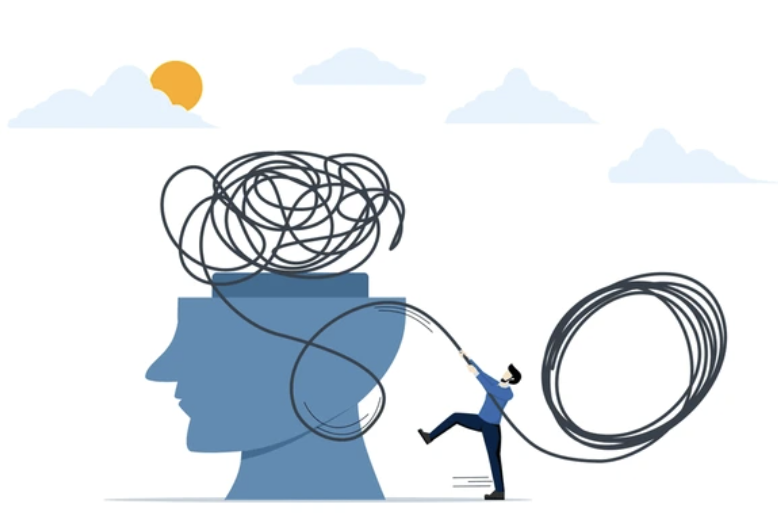
The human brain is not naturally wired for meditation.
From an evolutionary perspective, the brain developed as a survival tool. Its primary responsibilities include:
- Detecting threats
- Anticipating danger
- Solving problems
- Seeking reward
This system is governed largely by structures like the amygdala and prefrontal cortex, which constantly scan for stimuli and interpret reality in terms of risk and reward.
Now consider what meditation asks you to do:
- Sit still
- Withdraw attention from external stimuli
- Stop engaging with thoughts
- Observe without reacting
To the brain, this is not growth—it is irrelevance.
And anything that appears irrelevant to survival is quietly resisted.
This is the first layer of resistance:
Your biology interprets meditation as unnecessary.
The Default Mode Network: Your Inner Noise Machine
Modern neuroscience has identified a system in the brain called the Default Mode Network (DMN)—a network of interacting brain regions active when the mind is not focused on the outside world.
This network is responsible for:
- Daydreaming
- Self-referential thinking
- Regret about the past
- Anxiety about the future
In simple terms, the DMN is the source of your mental chatter.
Studies show that during meditation, activity in the DMN begins to decrease. This is often interpreted as a positive sign.
But here’s the problem:
The brain does not like losing control of its dominant system.
So what happens?
- Thoughts increase instead of decreasing
- Old memories resurface
- Random ideas flood the mind
- Emotional discomfort intensifies
This is not failure.
This is neural resistance to silence.
The mind is not calming down—it is defending its dominance.
Why Beginners Experience More Chaos, Not Peace
One of the most misunderstood aspects of meditation is this:
The initial phase often feels worse than not meditating at all.
People report:
- Increased anxiety
- Irritation
- Mental overload
- Physical restlessness
This leads many to quit, believing meditation is ineffective.
But what is actually happening is closer to this:
When you sit in silence, you remove distractions.
And when distractions are removed, suppressed content surfaces.
Think of it like shaking a bottle that has been sealed for years.
Meditation does not create chaos.
It reveals pre-existing chaos that was previously hidden under constant stimulation.
This is the second layer of resistance:
The mind resists exposure.
The Ego’s Subtle Defense Mechanism
Beyond biology and neural activity lies something even more complex—the ego structure.
The ego is not arrogance. It is your sense of identity.
It is built from:
- Your memories
- Your beliefs
- Your achievements
- Your fears
Meditation, when practiced deeply, begins to loosen the grip of this identity.
You start observing thoughts instead of identifying with them.
And this is where resistance becomes more psychological.
Because from the ego’s perspective:
“If you stop identifying with me, what happens to ‘you’?”
This creates subtle forms of resistance:
- Sudden urge to stop meditation
- Doubt about the practice
- Seeking constant validation (“Am I doing this right?”)
- Switching techniques frequently
These are not random behaviors.
They are defense mechanisms to preserve identity.

Case Insight: Why High Performers Struggle More
Interestingly, individuals who are highly driven—entrepreneurs, leaders, high achievers—often struggle more with meditation.
Why?
Because their identity is strongly tied to:
- Action
- Achievement
- Control
Meditation demands the opposite:
- Stillness
- Non-doing
- Surrender
This creates a psychological conflict.
For such individuals, sitting quietly can feel like:
- Wasting time
- Losing productivity
- Letting go of control
In reality, what they are experiencing is not inefficiency—it is withdrawal from constant stimulation.
And withdrawal always feels uncomfortable before it feels liberating.
The Misinterpretation That Destroys Progress
At this stage, most people make a critical mistake.
They interpret resistance as:
- “I’m not good at meditation.”
- “This is not working.”
- “My mind is too active.”
This interpretation becomes the reason they quit.
But the truth is:
Resistance is not a sign of failure. It is a sign that something is actually happening.
This same resistance is not limited to meditation—it also shows up in everyday habits, where people find it difficult to sit in silence but can easily stay engaged with constant stimulation.”
If there were no resistance, it would mean the mind is not being challenged at all.
The Medulla Connection: A Deeper Perspective
As you move deeper into meditation practices, especially those rooted in traditional systems like Kriya Yoga, attention begins to shift toward specific internal points.
One such point often discussed is the medulla oblongata—a part of the brainstem that regulates vital functions like breathing and heart rate.
In many spiritual traditions, this region is considered a gateway between the physical and higher states of awareness.
Indian traditional systems such as Kriya Yoga describe the Kutastha—the subtle point located between the eyebrows, corresponding internally to the medulla oblongata—as a center of higher awareness. As one advances into deeper states of consciousness, what unfolds is not something tangible or sensory, but an expansive inner void—imbued with a profound sense of universal bliss and stillness. It is an experience that can be deeply felt and lived, yet it transcends language, remaining beyond complete description or intellectual interpretation.
While scientific research primarily focuses on its physiological role, practitioners often report:
- Heightened awareness
- Deep stillness
- A sense of detachment from the body
- A deeper connection between breath and consciousness
The early confusion and restlessness many experience in meditation can be partially understood through this transition.
You are not just calming the mind.
You are redirecting awareness away from habitual neural pathways toward deeper internal systems.
And such a shift is never frictionless.
Breaking Through Resistance: What Actually Works
At this point, the question is not whether resistance exists—it clearly does.
The real question is:
How do you move through it without quitting?
The answer is not in forcing the mind into silence.
That approach only strengthens resistance.
Instead, progress comes from understanding and alignment.
1. Redefine Success
Stop measuring meditation by how calm you feel.
Measure it by:
- Consistency
- Awareness of thoughts
- Ability to sit despite discomfort
2. Allow the Noise
Do not fight thoughts.
Observation without reaction gradually weakens the Default Mode Network.
3. Short but Consistent Sessions
Long sessions increase frustration in early stages.
Start with manageable durations and build gradually.
4. Expect Discomfort
If you know resistance is part of the process, it stops feeling like failure.
It becomes predictable.
5. Avoid Technique-Hopping
Constantly switching methods resets your progress.
Depth comes from staying with one approach long enough.
The Turning Point: When Resistance Starts to Fade
Something interesting happens when you persist beyond the initial phases.
- Thoughts reduce in intensity
- Emotional reactions soften
- Moments of stillness appear unexpectedly
This is not because the mind has been “controlled.”
It is because the mind has stopped fighting.
And when resistance fades, meditation stops feeling like effort.
It begins to feel like returning to something familiar.
Conclusion:
The Real Meaning of Progress
Meditation is often misunderstood as a technique to achieve peace.
But in reality, it is a process of unlearning resistance.
What you experience in the beginning:
- Restlessness
- Doubt
- Mental noise
…are not obstacles.
They are indicators.
They show you exactly where your conditioning lies.
And every time you sit despite that resistance, you are not just practicing meditation—
You are retraining your entire system to function beyond survival-driven patterns.
So the next time meditation feels difficult, remember this:
It is not failing you.
You are encountering the part of your mind that has never been questioned before.
And that encounter, uncomfortable as it may be,
This is where real transformation begins.
Resistance to meditation is not an exception—it is the rule, and understanding this itself is part of the journey. What truly matters is the willingness to continue despite that resistance, with discipline, sincerity, and a consistent, almost religious commitment to the practice. The methods and insights discussed here are not theoretical—they are meant to be lived, and over time, they do help in gradually dissolving this inner resistance.
But let’s be clear, it is not easy. Had there been no resistance, had the mind been so simple to quiet, everyone would have already attained MOKSHA through meditation. Yet the presence of difficulty does not make it impossible—it only makes the journey real. With steady effort and dedication, what once felt like resistance can slowly give way to stillness, and that stillness is where the deeper possibility lies.
#Meditation #Mindfulness #SpiritualGrowth #BrainScience #MentalHealth #InnerPeace #KriyaYoga #Consciousness #SelfAwareness #Neuroscience #MeditationJourney #HealingMind #Awakening #Focus #StressRelief



Pingback: Why Meditation Fails for Most People: The Hidden Struggle No One Talks About - Eastside Writers
Pingback: Meditation Is No Luxury. It Is A Necessity In Today's Chaotic World.
Pingback: Why Your Mind Resists Growth: From Meditation to Desire, the Hidden Pattern Controlling Your Life - Eastside Writers
Pingback: Why You Can’t Sit in Silence—But Can Scroll for Hours to Satisfy Hidden Desires - Eastside Writers
Pingback: Why You Can’t Sit in Silence—But Can Scroll for Hours to Satisfy Hidden Desires - Eastside Writers
Pingback: Hypoactive Sexual Desire Disorder - Its Cause and Remedy
Pingback: Why Sexual Thoughts Arise During Meditation: The Science, Psychology, and Spiritual Perspective - Eastside Writers
Pingback: Can Meditation Reveal Your Past, Future, and Hidden Potential? - Eastside Writers
Pingback: Why Kutastha (Christ Consciousness) Makes You Naturally Magnetic - Eastside Writers