
Most people don’t fail at meditation in the way they think.
They don’t fail because they lack discipline.
They don’t fail because they are “not spiritual enough.”
And they certainly don’t fail because meditation doesn’t work.
They fail because what they experience… is nothing like what they were promised.
They were told meditation would bring peace.
Silence. Stillness. Clarity.
But what they actually encounter is something very different.
Restlessness.
Endless thoughts.
Discomfort.
And sometimes, an uncomfortable confrontation with their own mind.
And that’s where most people quietly give up.
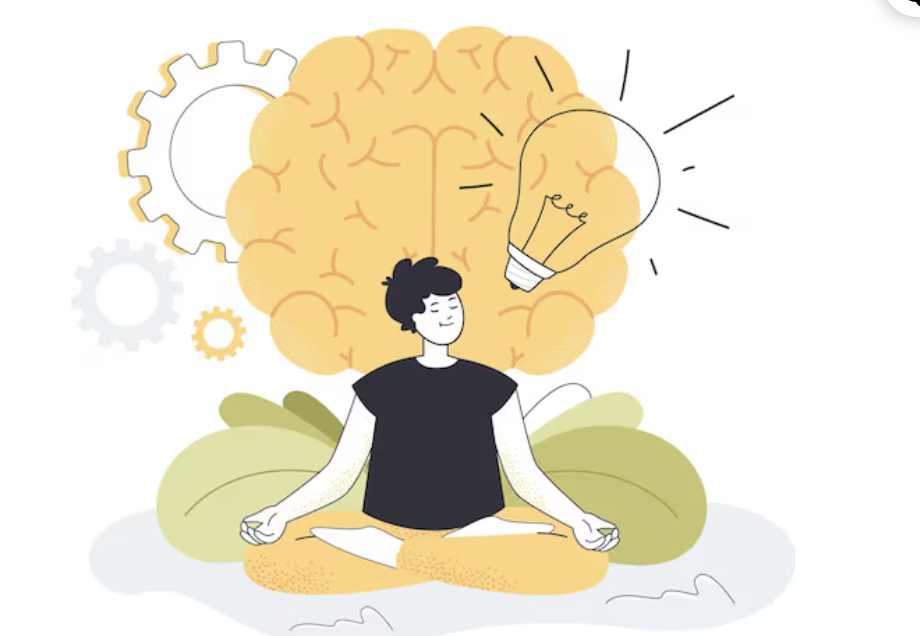
Why Meditation Fails for Most People in the Beginning
One of the biggest reasons why meditation fails for most people is the expectation of immediate results. People sit down expecting calmness, but instead experience restlessness and overthinking. This creates a false belief that meditation is not working. In reality, what feels like failure is simply the mind reacting to stillness for the first time. Understanding this early phase is crucial because meditation often feels hardest right before it starts becoming effective.
Studies referenced by the National Institutes of Health show that increased awareness during meditation can initially make mental activity feel more intense.
The First Shock: Your Mind Gets Louder, Not Quieter
When you sit down to meditate for the first time, something unexpected happens.
It becomes louder.
Thoughts you didn’t even realize were there start surfacing—memories, worries, random conversations, unfinished tasks. It feels chaotic, almost overwhelming. Research highlighted by Harvard Health Publishing suggests that meditation doesn’t immediately silence the mind, but gradually changes how we relate to our thoughts.
Many people assume this means they’re doing it wrong.
But in reality, this is the first sign that something is actually working.
Meditation doesn’t create thoughts—it reveals them.
What most people don’t realize is that this resistance isn’t random—it comes from a deeper pattern in the mind. If you want to understand this root cause in depth, you can explore how the mind subtly avoids stillness and growth.
Research highlighted by Harvard Health Publishing suggests that meditation doesn’t immediately silence the mind, but gradually changes how we relate to our thoughts.
For years, your mind has been constantly active, but you’ve been too distracted to notice. The moment you sit in silence, you finally become aware of the noise that was always there, which is also why many intelligent people secretly crave escapism through endless stimulation and digital distraction.
And that awareness can feel uncomfortable.
Without proper guidance, many people struggle to choose the right meditation technique, often switching methods without understanding their deeper purpose.
The Real Problem: We Approach Meditation Like a Task
In today’s world, everything is goal-oriented.
We go to the gym for results.
We work for outcomes.
We expect progress to be visible and measurable.
So naturally, we approach meditation the same way.
We sit down expecting:
- A calmer mind
- Fewer thoughts
- A sense of peace
And when that doesn’t happen quickly, frustration sets in.
But meditation doesn’t work like a task.
It’s not something you “achieve.”
It’s something you experience and understand over time.
The more you try to control it, the more it resists you.
As you continue observing your thoughts without reacting, you begin to realise that there is a deeper layer of awareness beyond the constant activity of the mind.
The Silent Struggle No One Talks About
Here’s what most people won’t admit:
Sometimes meditation makes them feel worse.
Not permanently—but temporarily.
When you remove distractions, you come face-to-face with things you’ve been avoiding:
- Anxiety
- Unresolved emotions
- Inner conflicts
- Restlessness
Meditation brings awareness, and awareness doesn’t always feel pleasant in the beginning.
This is why many people stop.
Not because meditation failed—but because it revealed something they weren’t ready to face.
Understanding hidden resistance to meditation can completely change how you approach your practice and overcome early struggles.
Why the Mind Resists Stillness and Avoids Growth
The mind is naturally wired to avoid discomfort and seek familiar patterns. This is why sitting in silence feels difficult—it removes distractions and exposes underlying thoughts. The same resistance that appears in meditation also shows up in daily life through procrastination, distraction, and avoidance. This is not a flaw, but a protective mechanism. However, without awareness, this pattern keeps repeating and quietly limits personal growth and self-awareness.
Why Consistency Feels So Hard
Another reason people struggle is consistency.
It’s easy to meditate when you feel calm.
It’s much harder when your mind is restless.
And ironically, those are the moments when meditation is needed the most.
But without understanding this, people fall into a pattern:
- Try for a few days
- Feel no “result”
- Slowly stop
Meditation then becomes something they “used to do.”
What meditation gradually reveals is not just a calmer mind, but a profound shift in how you perceive yourself and your inner reality. As the practice deepens, it can guide you toward higher levels of awareness—often described as a state of expanded or elevated consciousness. Some traditions refer to this as entering a supreme state of being, while from a scientific perspective, deeper meditative states are associated with changes in brain function and awareness.
Why People Quit Meditation Before It Starts Working
Another key reason why people quit meditation is the lack of visible progress. Unlike physical activities, meditation does not produce immediate or measurable results. The benefits are subtle and build over time, which makes it easy to doubt the process. When expectations are not met quickly, motivation drops and consistency breaks. This is where most people stop—just before the deeper benefits of meditation and mental clarity begin to develop.

Technique Confusion: Too Many Paths, No Clarity
Today, there are countless meditation techniques:
- Breath awareness
- Mantra meditation
- Guided meditation
- Visualization
Each one works differently.
Without guidance, people jump from one method to another, never staying long enough to experience real depth.
This creates confusion instead of clarity.
For those seeking a more structured and deeper approach, certain traditional practices offer a systematic path to understanding and refining the mind.
The Body Matters More Than You Think
Most people focus only on the mind.
But the body plays a crucial role.
If your posture is uncomfortable:
- Your attention keeps shifting
- Your focus breaks
- Your experience becomes frustrating
Ancient practices always emphasized alignment of body and breath before the mind.
As awareness deepens, many begin to notice subtle shifts within—something often associated with the body’s energy centers and their alignment.
So… Does Meditation Actually Work?
Yes.
But not in the way most people expect.
Meditation doesn’t instantly silence your mind.
It changes your relationship with it.
Over time, something subtle begins to shift:
- You react less
- You observe more
- Thoughts lose their intensity
- Silence appears—not forced, but natural
It’s not dramatic.
It’s not sudden.
But it is real.
Final Thought
If you’ve ever felt like meditation isn’t working for you, you’re not alone—and more importantly, you’re not doing it wrong.
What you’re experiencing is not failure.
It’s the beginning of awareness.
Yogic disciplines like meditation and Brahmacharya were designed to refine awareness of such inner energies, including Virya.
The restlessness, the distractions, the wandering mind—these are not obstacles to meditation. They are the very material meditation works with.
The key is not to force silence, but to allow understanding.
And once that shift happens—even slightly—you begin to notice something important.
You may still have thoughts.
You may still feel restless at times.
But you’re no longer controlled by them.
And that quiet sense of space—that distance between you and your mind—is where real change begins.
Not instantly.
Not dramatically.
But steadily, in a way that stays with you.
According to Mayo Clinic, mindfulness practices focus on observing thoughts without judgment rather than trying to eliminate them.
#Meditation, #SpiritualGrowth, #Mindfulness, #InnerPeace, #SelfAwareness



Pingback: How to Reduce Your Karmic Bondage Through Kriya Yoga: A Path Toward Moksha - Eastside Writers
Pingback: The Gateway To Super-Consciousness: The Profound Spiritual Significance Of The Medulla Oblongata - Eastside Writers
Pingback: The Hidden Resistance to Meditation: What Your Mind Doesn’t Want You to Know - Eastside Writers
Pingback: Meditation Is No Luxury. It Is A Necessity In Today's Chaotic World.
Pingback: Why You Can’t Sit in Silence—But Can Scroll for Hours to Satisfy Hidden Desires - Eastside Writers
Pingback: Can Meditation Reveal Your Past, Future, and Hidden Potential? - Eastside Writers
Pingback: Why Can't I Quiet My Mind? The Simple Truth About Overthinking That Meditation Reveals - Eastside Writers
Pingback: Debunking Myths about Meditation and Spiritual Growth