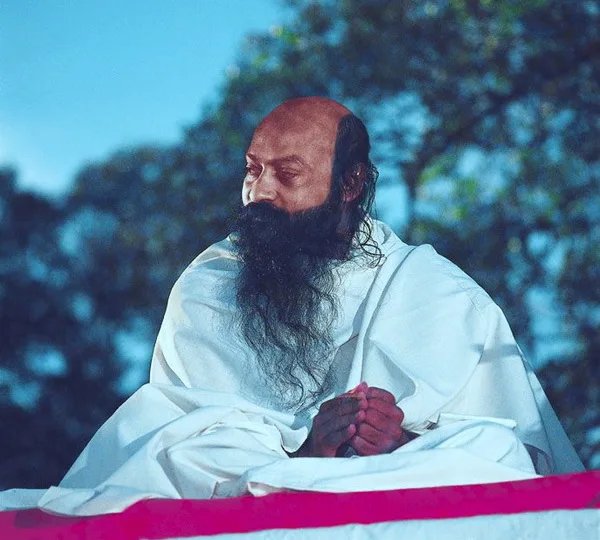
There are books that inform, books that entertain, and books that gently illuminate the edges of our understanding. And then there are books like Osho’s The Heart Sutra — books that do not merely speak to the reader but shake the very foundation on which the reader stands. Rarely does a book arrive as an inner earthquake, but this one does. It is not just a commentary on the ancient Buddhist Heart Sutra; it is a living, pulsing invitation to step directly into the heart of existence, where nothing stands between the seeker and the sacred.
Osho does not lecture in this book; he awakens. He does not analyze; he dissolves. And through his words, the Heart Sutra — one of the most condensed, mysterious, and powerful scriptures of all time — becomes a doorway into a transcendental state that is astonishingly simple, shockingly immediate, and entirely possible for every human being.
The central message Osho draws out of the sutra is this:
The ultimate liberation — Nirvana, Moksha, Samadhi — is not somewhere else, not someday, not after discipline, austerity, pilgrimage, or even practice. It is here. It is now. It is this moment, uncluttered.
To read The Heart Sutra is to watch Osho peel away layer after layer of illusion, until only a single truth remains: existence is available only in the present moment; everything else is imagination. And the book calls out to those who are genuinely seeking inner transformation — not consolation, not religion, not philosophy — but a direct, lived experience of freedom.
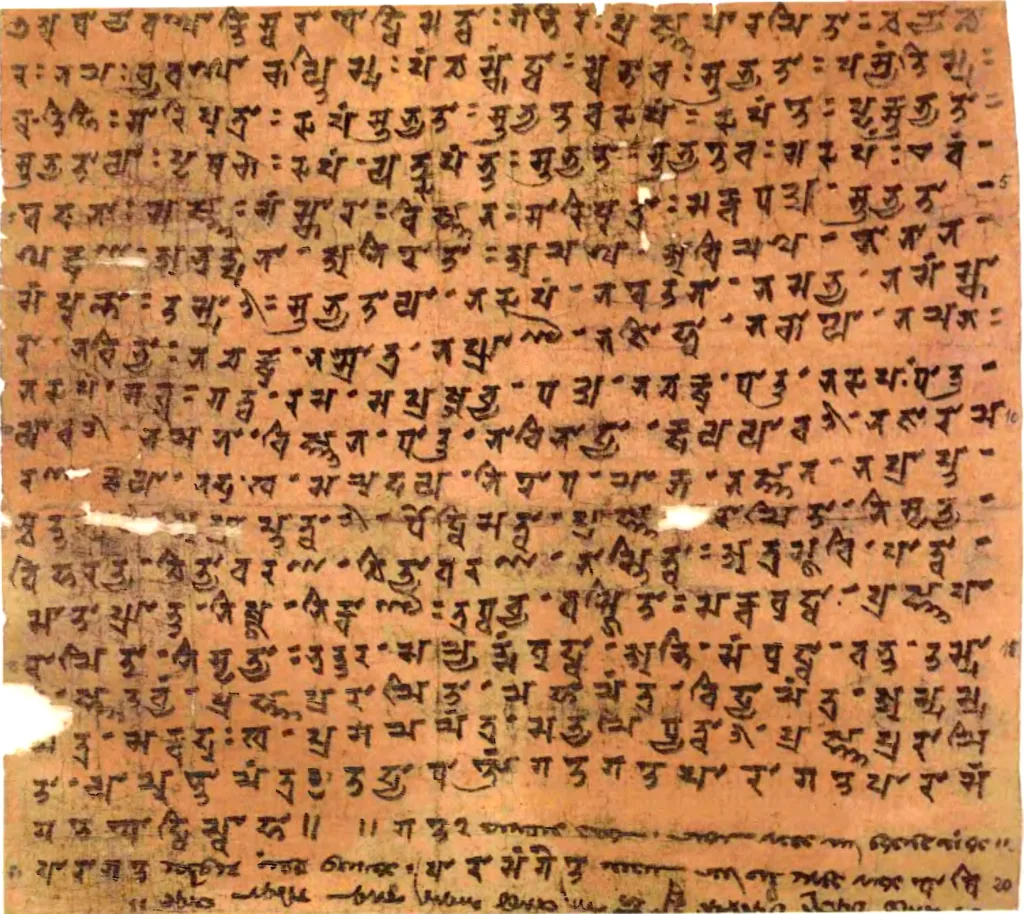
THE HEART SUTRA: A DOORWAY THAT OPENS INWARD
There are many scriptures in the world, but none like the Heart Sutra. It is startling in its brevity and even more startling in its daring proclamation that everything we cling to — the self, the mind, thought, desire, suffering — is empty.
This “emptiness,” however, is not negative. Osho describes it as fullness, vastness, pure space. Not a dead vacuum but a living aliveness in which nothing obstructs anything else. When Osho lifts the meaning of “emptiness” out of ancient language and brings it into the present, it begins to breathe again. Suddenly, a 2500-year-old sutra becomes a contemporary guide for anyone longing for inner peace.
Osho’s commentary transforms the Heart Sutra from an esoteric text into an experiential journey. He makes the profound accessible without making it shallow, and makes the mystical graspable without compromising its mystery. The way he communicates the essence of Prajnaparamita — the perfection of wisdom — is both liberating and disorienting. It is as though he takes the reader by the hand and leads them right to the edge of the known, then gently invites them to step across.
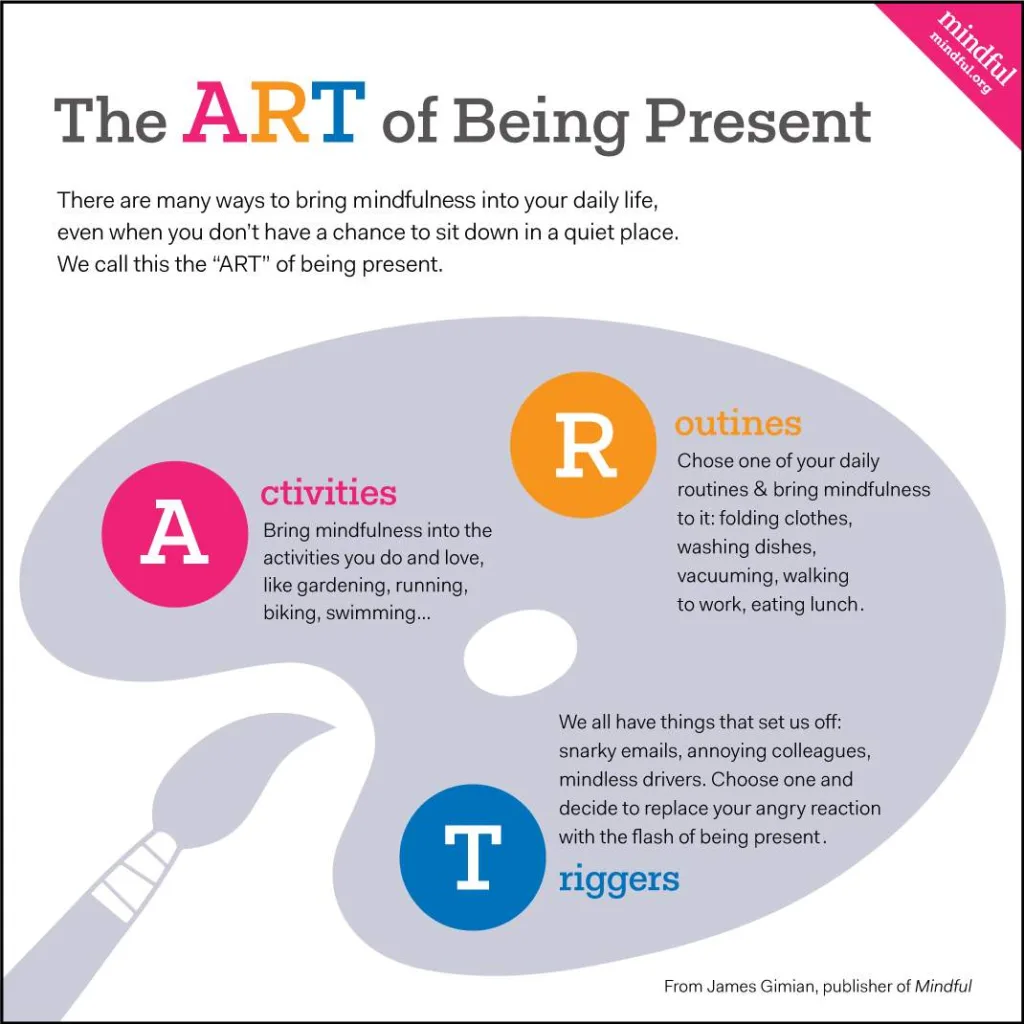
THE REVOLUTION OF THE PRESENT MOMENT
If there is one thing that echoes through every page, every anecdote, every silent pause of Osho’s discourse on the Heart Sutra, it is this:
Only the present moment is real.
Only the present moment can liberate.
Only the present moment is Nirvana.
This is the heart of the book, and Osho devotes immense clarity to explaining it. He dismantles our lifelong obsession with the past and the future. The past, he says, is nothing but memory. The future is nothing but imagination. Neither exists. Yet we spend our whole lives living in those two non-existent realms.
This is why enlightenment seems distant — not because it is far away, but because we are far away from the moment in which it exists.
Osho writes not as a scholar but as a master who has tasted the deepest silence. He does not tell us to “practice being present” — he challenges the very notion that effort is needed. Presence, he asserts, is our natural state. We have simply forgotten it beneath layers of conditioning, fear, and constant thinking.
The moment the mind stops wandering — even for a breath — an inner clarity dawns. It is in that gap, that pause, that silence, where the door to transcendence opens.

OSHO’S GIFT: MAKING THE MYSTICAL HUMAN AND PRACTICAL
One of the beauties of this book is how Osho takes profound spiritual insights and brings them into the everyday world. He speaks with humour, with warmth, sometimes with shock, sometimes with unexpected stories, but always with the intention to awaken the reader.
He makes it clear that transcendence is not a goal reserved for monks or ascetics. It is for the mother washing dishes, the businessman stuck in traffic, the student struggling with expectations, the retired man wondering about meaning, and the seeker who has travelled through many philosophies but still feels thirsty.
Osho’s genius lies in his ability to show that spiritual enlightenment is not against life — it is the flowering of life. It does not require withdrawal but a shift in consciousness.
The book paints enlightenment not as a mystical peak far away, but as the simplest and most natural state a human being can fall into once they stop clutching at thoughts. In one of the most striking parts of the commentary, Osho says that people miss enlightenment not because it is difficult, but because it is so simple that the mind cannot believe it.
To live in the now — fully, intensely, innocently — this is the only requirement. But to the mind that is addicted to the past and the future, this seems too effortless to be true.
THE BEAUTY OF EMPTINESS: NOT NOTHINGNESS BUT PURE BEING
Readers often misunderstand terms like “emptiness” or “void.” Osho takes special care to demystify these ideas. In his hands, emptiness becomes not negation but a doorway to abundance.
He says emptiness is simply the absence of clutter — the absence of the ego, of constant noise, of fabricated desires. When that inner space becomes empty, something extraordinary happens: you become full.
- Full of awareness.
- Full of joy.
- Full of silence.
- Full of existence.
In that fullness, suffering disappears not because problems vanish, but because the one who suffers — the ego — dissolves into spaciousness. Osho describes this dissolution not as loss but as liberation. It is like dropping a weight you did not know you were carrying all your life. Suddenly, life becomes lighter, freer, simpler.
The Heart Sutra’s proclamation — “Form is emptiness, emptiness is form” — becomes, in Osho’s words, a marriage between the visible and the invisible. The world remains the same, but your relationship with it changes completely. You no longer cling, resist, or interpret life; you simply flow with it.
LIVING WITHOUT FEAR: WHEN NOTHING CAN BE LOST
One of the profound gifts this book offers is the understanding that fear arises from attachment — and attachment arises from the illusion of a separate self. When the idea of “I” loosens, fear loses its oxygen.
Osho explains how fear is always connected to the future:
fear of losing, fear of death, fear of failure, fear of judgment.
But when you are fully in the now, the future simply does not exist. Fear collapses like a shadow in light.
In this sense, transcendence is not an escape from life but an entry into life with such completeness that nothing remains to frighten you. People run after security their entire lives, but the only real security is this: when you are rooted in the present moment, nothing can be taken away from you.
THE MIRROR OF AWARENESS
Perhaps the most powerful effect of the book is how it acts as a mirror. The reader keeps seeing themselves — their restlessness, their patterns, their hopes, their illusions — reflected in Osho’s words. And as the mirror becomes clearer, one begins to realise that freedom is not in becoming something else, but in recognising what we already are beneath the layers.
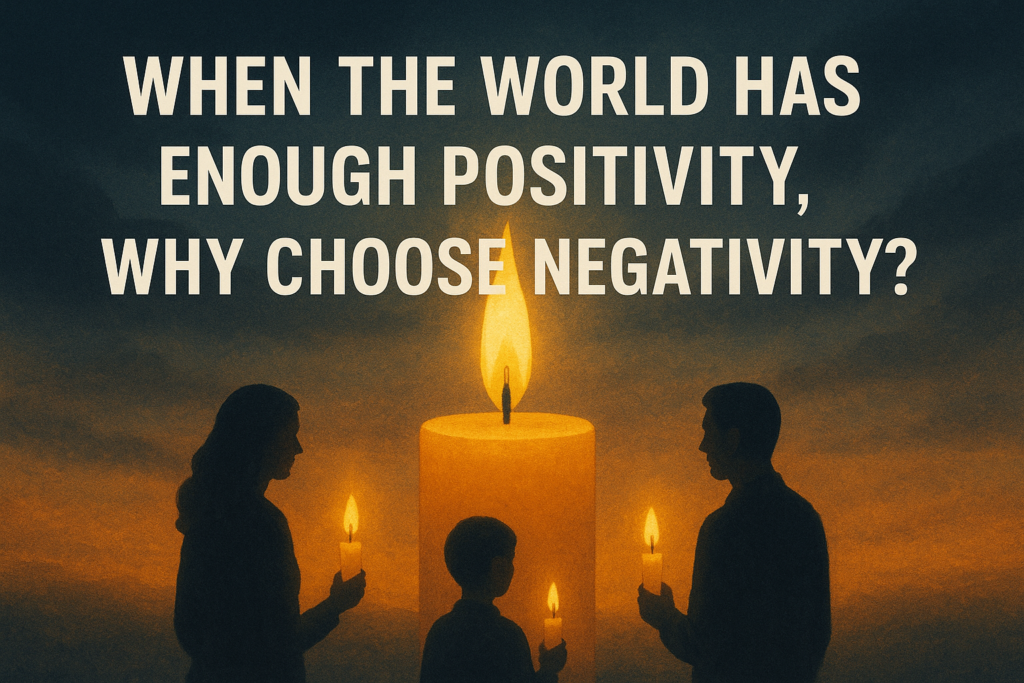
Awareness, Osho says, is not something you do. It is something you access. A candle does not try to shine; it shines because that is its nature. Similarly, awareness is not effortful. The moment you stop doing, stop forcing, stop striving, awareness rises on its own like a flame.
Osho describes awareness as the key that turns the lock of the Heart Sutra. When you look at the mind without judgment, without involvement, without identification, the mind begins to slow down. In that slowing, spaces appear, and in those spaces you meet yourself for the first time — not the personality, not the identity, but the consciousness that exists without story.
WHY THIS BOOK IS A MUST-READ FOR SEEKERS
There are many books that talk about spirituality. There are far fewer that transform the reader simply through their presence. The Heart Sutra by Osho belongs to the second category.
It is not merely a commentary — it is an energy transmission. You do not finish the book as the same person who started it. Something quiet shifts inside. Something subtle rearranges itself.
This book is a must-read for anyone who:
- is seeking a deeper understanding of life,
- feels stuck between obligations and inner longing,
- wants a spiritual path that is alive and practical,
- is searching for clarity beyond religious dogma,
- or simply wishes to taste a moment of inner silence.
You do not have to “believe” anything Osho says. Nor are you asked to accept Buddhist philosophy. The book does not demand faith — it invites experience.
And that is why it resonates so deeply with modern seekers. It does not ask you to renounce the world. It does not force any moral code. It simply guides you back to the one place where truth has always been waiting: here and now.
THE GATELESS GATE: A PATH THAT IS ALREADY OPEN
Toward the end of the book, Osho emphasises something extraordinarily liberating: enlightenment is not a door you must break open. It is not even a door you must knock on. It is a doorless door, a gateless gate.
You enter it not by struggle but by surrender.
Not by seeking but by stopping the search.
Not by going forward but by resting in stillness.
The moment you stop running, you arrive.
The moment you stop becoming, you are.
This is the paradox the Heart Sutra has been whispering for centuries, and Osho’s commentary brings it into crystalline clarity. The journey the seeker must make is not outward but inward, not upward but deeper, not toward the horizon but toward the center of one’s own being.
In that center, everything becomes clear.
In that center, everything falls into place.
In that center, you discover that what you were seeking was always within you.
CONCLUSION: THIS VERY MOMENT — THE ONLY MIRACLE NEEDED
If one were to summarise the message of the entire book in a single line, it would be this:
Nothing needs to change.
Only your presence needs to return.
This is the miracle of the Heart Sutra. This is the essence Osho brings forth with unmatched beauty. The book reminds us that the ultimate goal of human life — call it Nirvana, Moksha, Samadhi, Enlightenment — is not a destination but a perception. It is not an achievement but an awakening. It is not an event but a state of being.
And this state of being becomes available the very moment we stop fleeing into the future or clinging to the past.
Life is happening now.
Silence is available now.
Freedom is possible now.
And this “now” is eternal.
Osho’s The Heart Sutra is more than a book — it is a companion that walks with you to the threshold of your own consciousness and then gently encourages you to step into the vastness. It is a reminder that the sacred is already here, waiting patiently behind your thoughts, beneath your worries, inside your breath.
To anyone seeking clarity, depth, peace, or spiritual awakening — this book is not merely recommended.
It is essential.
#Mindfulness, #PersonalGrowth, #LifePhilosophy, #ConsciousLiving, #LeadershipMindset, #MotivationDaily, #SelfImprovement, #MindsetShift, #ModernSpirituality, #InnerJourney, #CareerWisdom, #SuccessMindset, #ThoughtLeadership, #DailyInspiration, #Awakening
DISCLAIMER:
The opinions, interpretations, and perspectives expressed in this blog are solely those of the author. East Side Writers has no obligation toward, and bears no responsibility for, any views, statements, interpretations, or factual representations described or displayed herein. All content is intended for informational and educational purposes only.